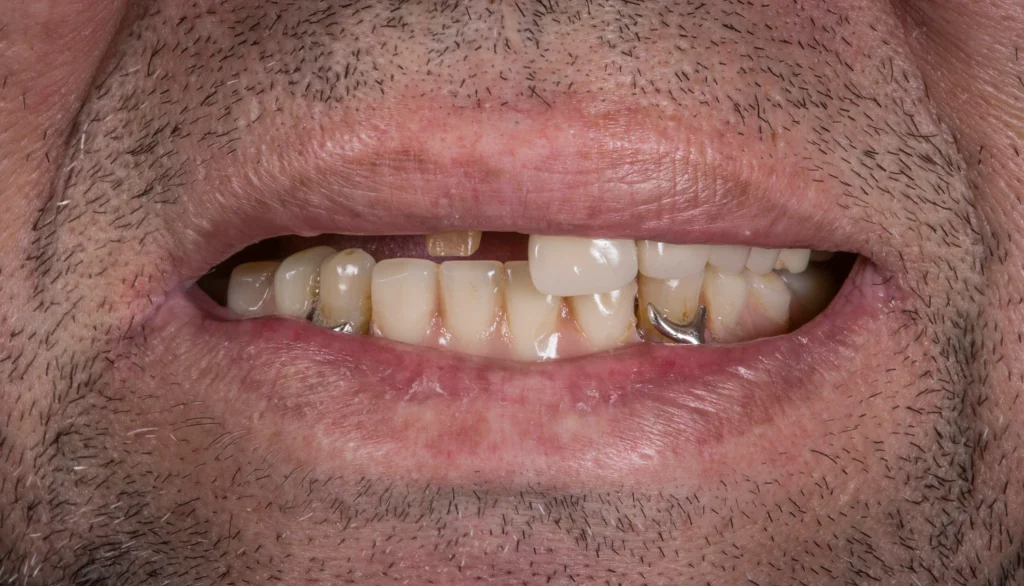
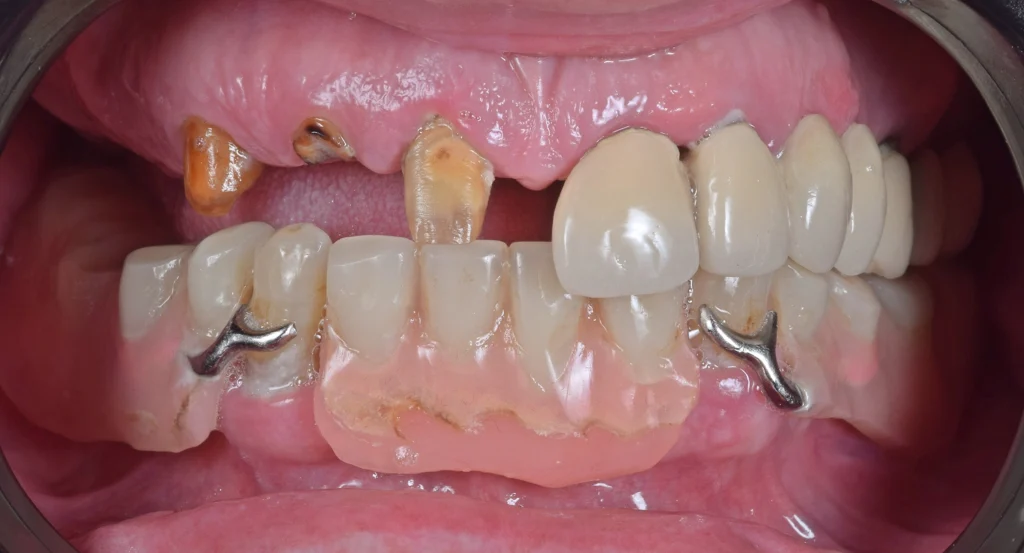
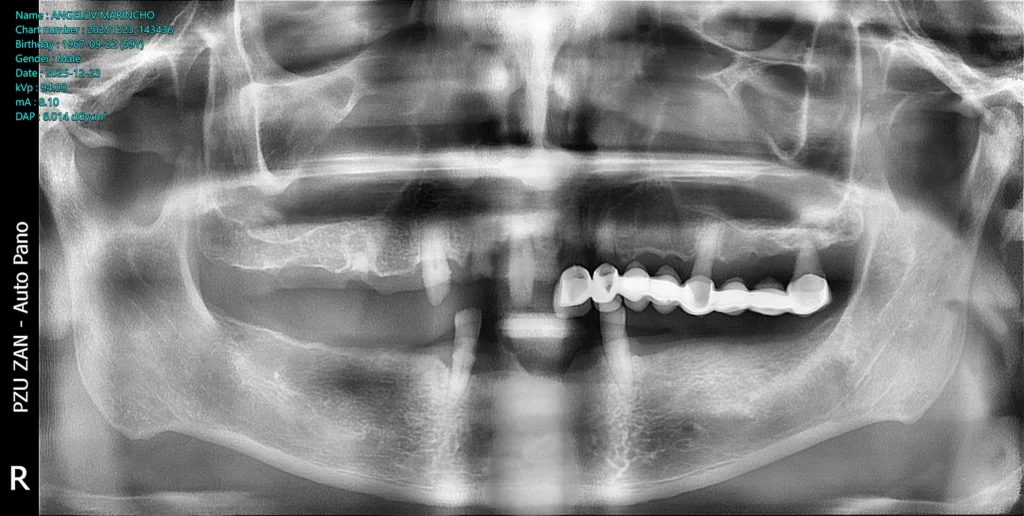
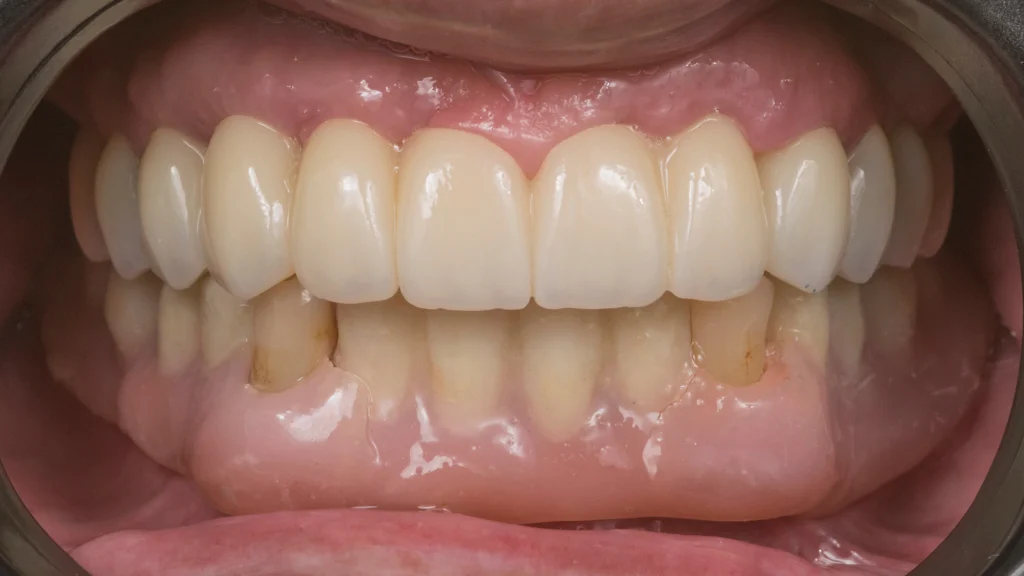
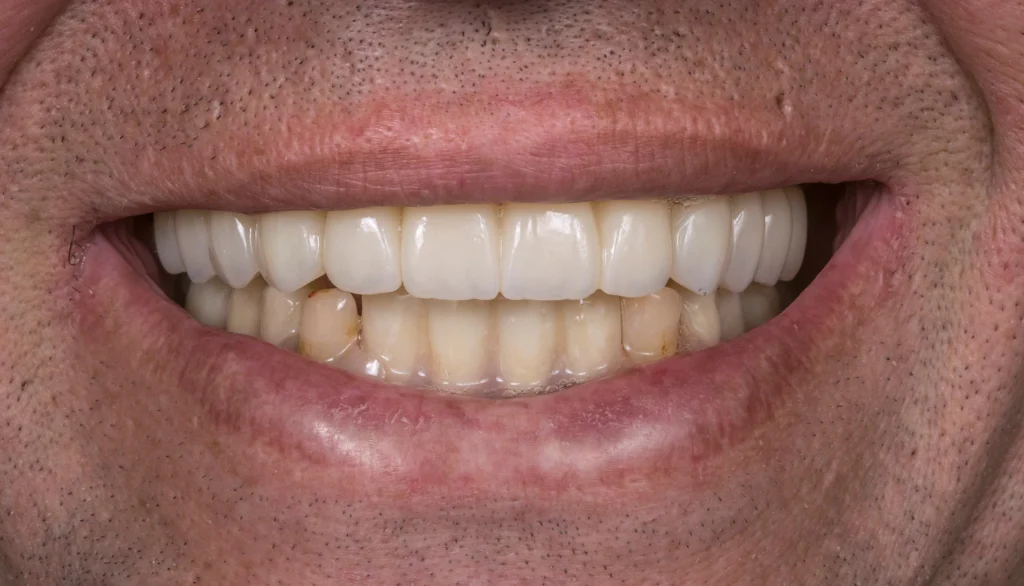
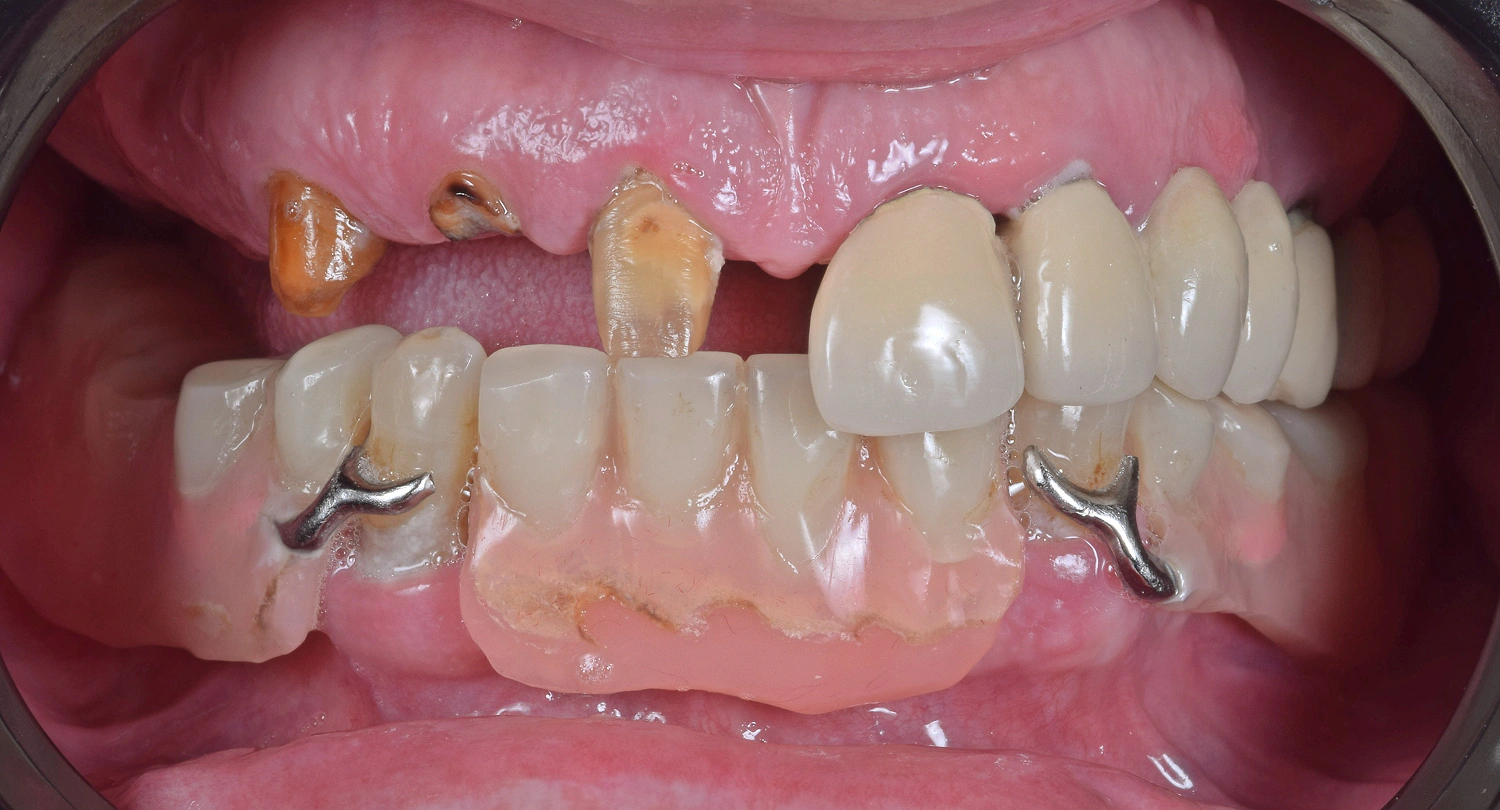
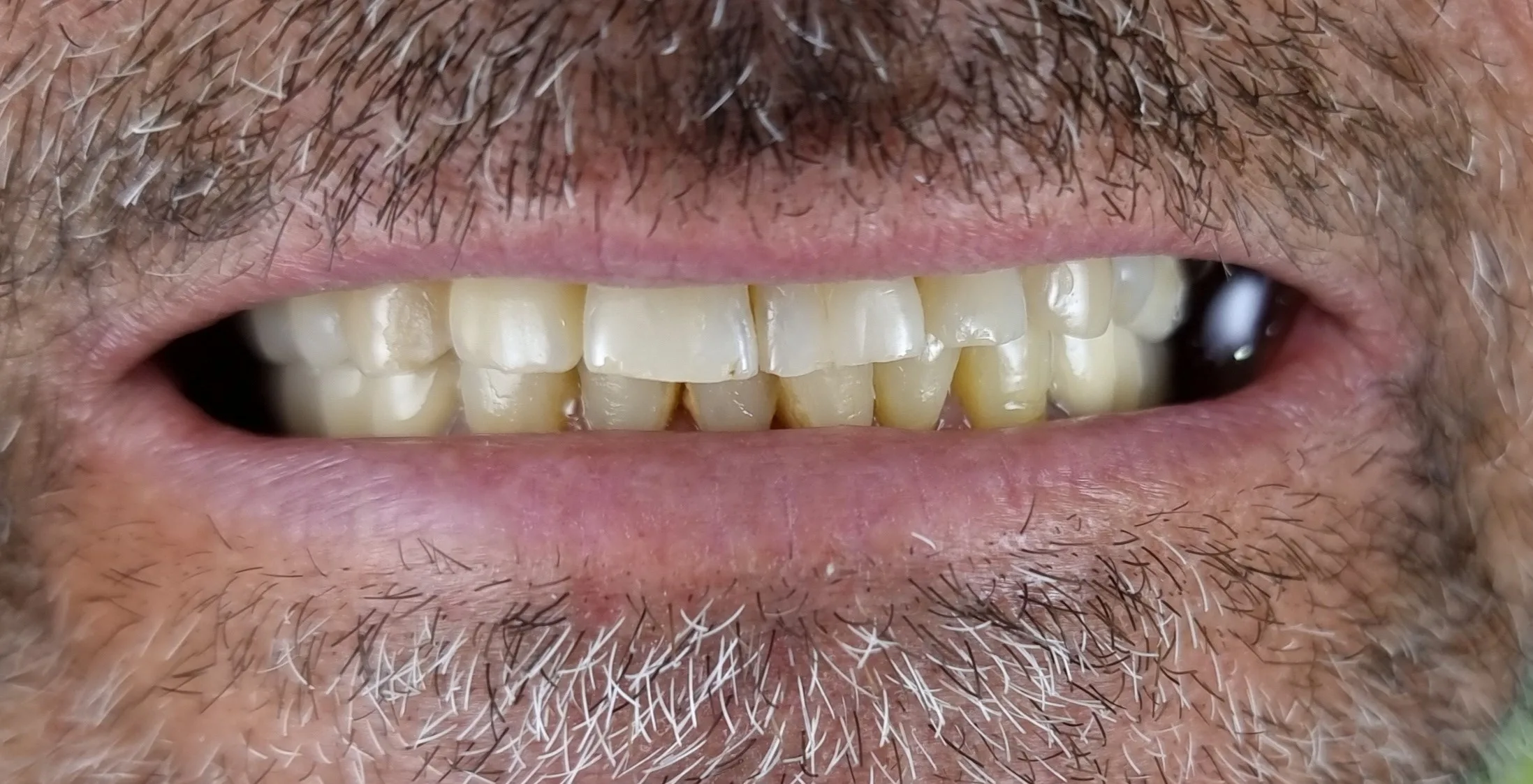
The patient came to our clinic with a fractured prosthetic restoration in the upper jaw. After a detailed 3D digital analysis, we determined that the remaining teeth could no longer provide a reliable foundation for a new prosthetic restoration.
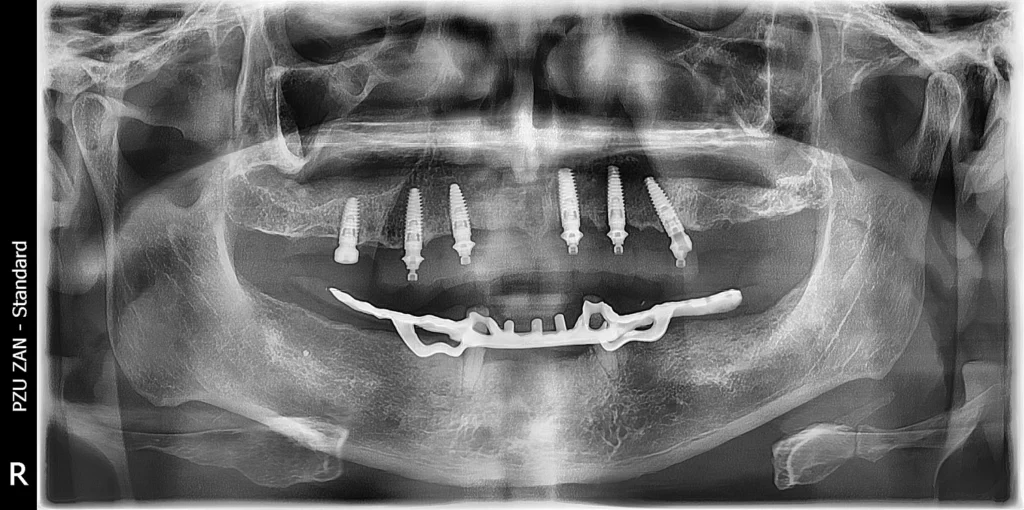
All remaining teeth in the upper jaw were therefore extracted, and six dental implants were precisely placed using a surgical guide — following the All-on-6 concept.
One of the major advantages of this approach is that the patient received a provisional set of teeth immediately, allowing them to leave the clinic with a functional and aesthetic temporary restoration.
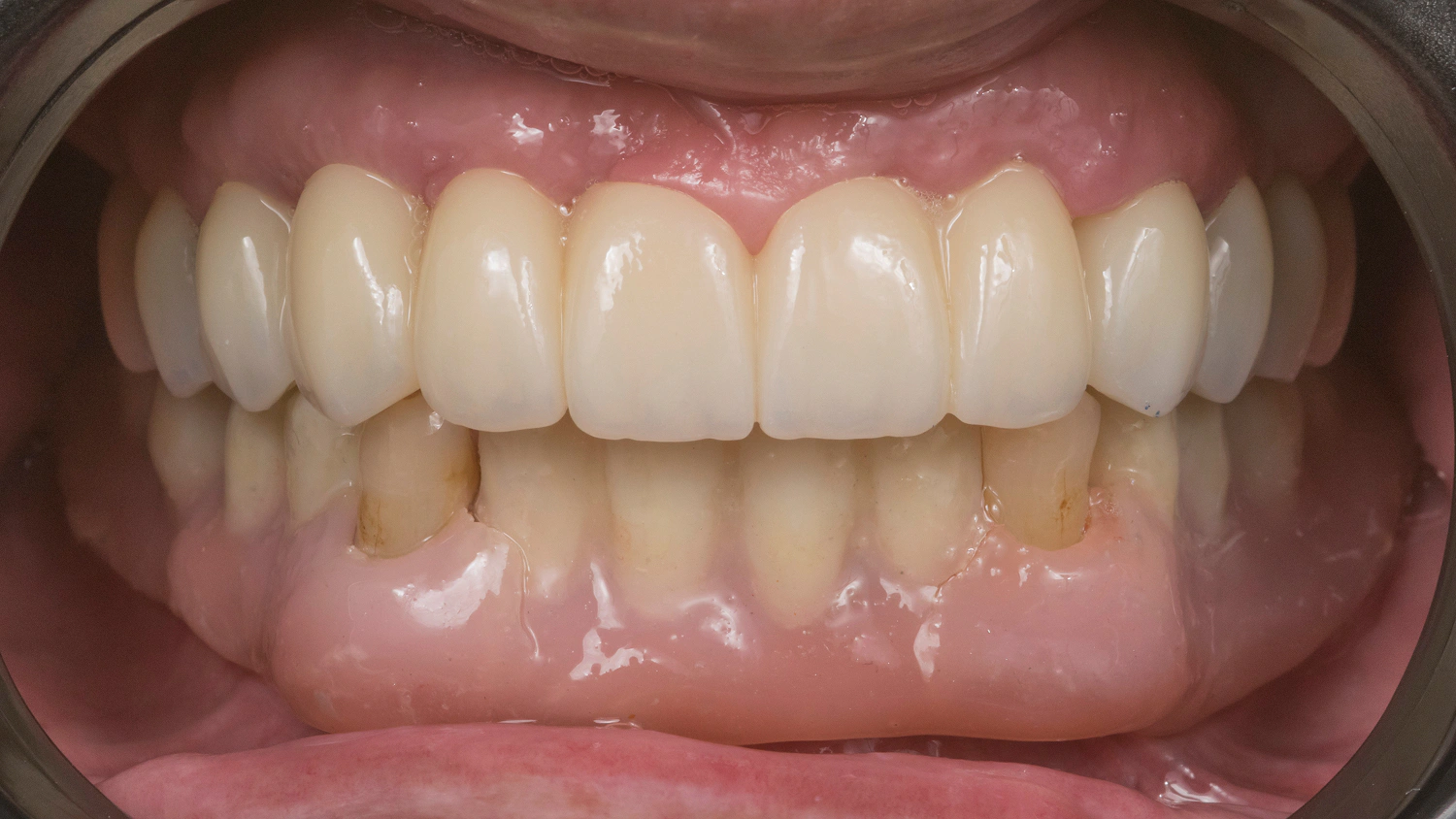
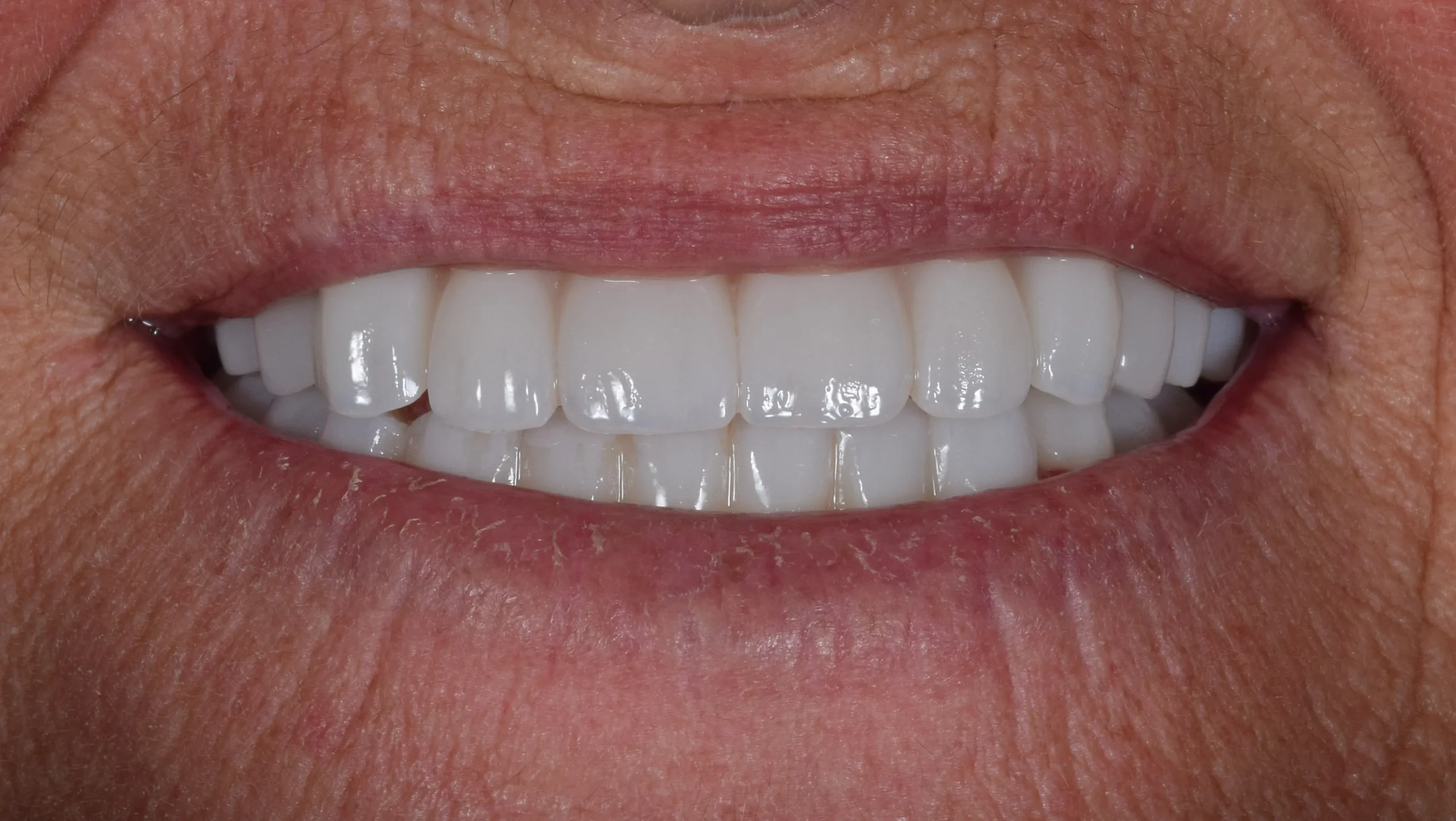
After a six-month period of implant integration and healing, we proceeded with the final restoration. A new metal-free zirconia prosthetic construction was fabricated to provide strength, aesthetics, and long-term stability.
For the lower jaw, we provided a new temporary denture while preparing for the next phase of treatment, with the same implant-supported approach planned.
This case is a great example of how digital dentistry, 3D imaging, intraoral scanning, and guided implant surgery have transformed the way we approach complex full-mouth rehabilitations.
These technologies allow us to plan each step with greater precision and predictability, while making the entire treatment experience more comfortable, efficient, and patient-friendly.